


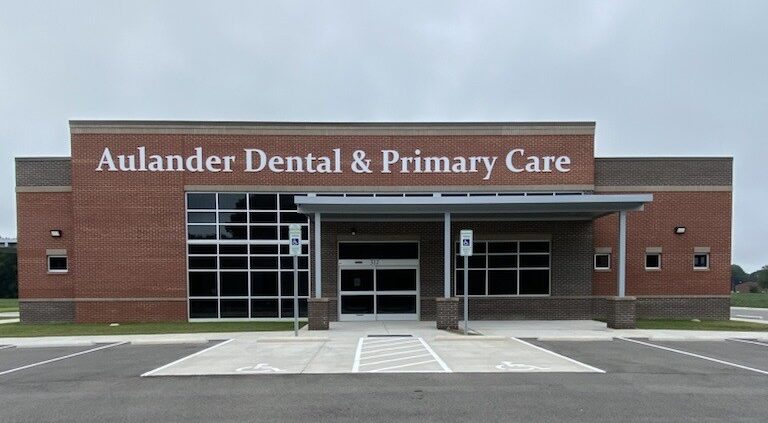
In the rural communities of Bertie, Hertford, Northampton, and Washington counties, access to primary care is already limited, and access to dental care has been even harder for residents to find. When two long-standing dental practices closed in the region, thousands of residents were suddenly left without care. For Roanoke Chowan Community Health Center (RCCHC), an FQHC committed to serving some of North Carolina’s most medically underserved populations, the need was clear.
This year, RCCHC not only opened its first-ever dental clinic but also received a $23,000 award through NCTNA’s Carolina Connection Grant, an NCTNA member support program created to light the path toward access to care for all by providing essential funds for projects aligned with NCTNA’s mission. These projects range from connectivity to technology updates, cybersecurity, and more. This funding helped secure the resilient connectivity necessary to launch a modern dental practice from the ground up.
A Small, Rural Region With Big Healthcare Needs
RCCHC’s service area is a cluster of small towns, many with populations of only 2,000 to 5,000 residents. Their six clinic locations care for a community that is predominantly rural, largely elderly or homebound, deeply dependent on Medicaid and Medicare, and one that faces major transportation barriers. The area is underserved by both medical and dental providers.
As Bill Sparks, RCCHC’s Director of IT and a board member at NCTNA, explained:
“We’re definitely rural… Our biggest site is maybe 5,000 people, and our smaller towns are two or three thousand. We have a lot of elderly, a lot of homebound patients.”
Opening a dental clinic wasn’t optional for the area; it was mission-critical. And when community canvassing confirmed the need, RCCHC invested in a brand-new building, full digital imaging capabilities, and modern equipment to serve the region.
But before the doors could open, they needed something foundational: a reliable, medical-grade broadband connection.
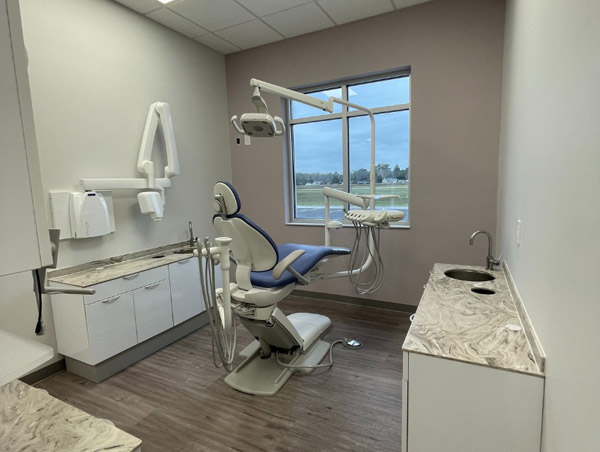
Launching a Dental Clinic Requires Strong Connectivity…
Months Before Opening Day
For RCCHC, connectivity wasn’t a “day one” need; it was a months-ahead need.
Well before patient care could begin, the team had to:
- Build out their Epic/OCHIN EMR for dental workflows
- Enable a dedicated site-to-site network connection back to the main clinic to enable access to our infrastructure
- Install imaging equipment requiring low-latency, high-bandwidth connections
- Set up Wi-Fi throughout the building
- Support vendors installing gas lines, equipment, and digital tools
- Overcome nonexistent cell service in the area
“We had to build the EMR instance, establish phone system and internet access, set up wireless, everything. Cellular service is lacking in the area, so we needed reliable connectivity in advance.” — Bill Sparks
The Real Challenge: High Costs and Unreliable Last-Mile Providers
Before RCCHC could connect to the NCTNA/MCNC network, the local last-mile provider had to completely build out new fiber infrastructure, including a DMARC point and new underground work. That price tag was steep, and because the clinic wasn’t yet “open,” or serving patients, RCCHC couldn’t access federal Rural Health Care Program discounts.
This is where the NCTNA Carolina Connection Grant made the difference.
“You have to put a sizable investment up front to have the infrastructure laid… The grant helped us absorb the cost of building it from scratch.” — Bill Sparks
And the challenges didn’t stop at cost. Bill described years of unreliable service and challenges when using legacy internet providers before becoming an NCTNA member. Those challenges included:
- Circuits cut without warning
- Months-long issues with phones
- Billing errors that took a year to resolve
- Inaccessible customer service
- Total loss of connectivity at the worst times
“Two of our clinics lost service without warning. Finding support to resolve the situation was extremely difficult. It was hard to connect with anyone who knew the area.”
Contrast that with NCTNA and MCNC’s services:
“Every person from NCTNA and MCNC has been great — cordial, helpful. Uptime has been great. It’s stable and reliable.” — Bill Sparks
How the NCTNA Grant Helped RCCHC Build for the Future
The combined $23,000 grant enabled RCCHC to:
1. Cover the upfront fiber build costs
This eliminated a large financial barrier to launching the clinic.
2. Prepare the site months in advance
Connectivity was necessary for EMR setup, dental imaging, equipment installation, and staff training.
3. Ensure medical-grade, low-latency connectivity
Which is Critical for:
- Digital X-ray and imaging transfers
- Voice quality for VoIP phones
- Reliable access to Ochin/Epic
- Seamless record sharing across all RCCHC sites
“You can transmit large files back and forth without issue. The signal is stable. There’s no delay or lag in imaging. NCTNA’s setup with MCNC fiber is solid. It just works.”
4. Reinforce cybersecurity capacity
With rising security threats facing FQHCs nationwide, even small grants help.
“Any resources you can conserve and invest in cyber security is helpful for the organization’s infrastructure. There are just so many new requirements now.” — Bill Sparks
A New Dental Clinic That’s Already Operating at Capacity
RCCHC’s new dental clinic has already become a lifeline for the community. From the very first day, patients were lined up outside the clinic doors, underscoring the overwhelming demand for accessible dental care in the community. With many residents having few or no other options for treatment, the need for services quickly became clear. Today, the clinic is already operating at a full schedule for its single dentist, highlighting both the critical gap in care and the immediate impact the clinic is making for local patients.
“People seem pleased. The clinic is busy every time I stop by. It’s been well received. There was definitely a need.”
— Bill Sparks
And because the dental clinic connects seamlessly to the main site, providers can now access patient dental records alongside primary care, ensuring integrated whole-person care. This is the future of rural healthcare, and it’s powered by resilient, affordable connectivity.
Why Broadband Matters for Rural FQHCs
As Bill emphasized, reliable connectivity isn’t a luxury. It’s the backbone of patient care, operations, interoperability, and safety.
“It saves loads of time… If you tried to use legacy connections, you’d have more equipment to maintain, more administrative burden, and way more legwork.”
And for RCCHC, in a region with very limited cell service, broadband is also a matter of staff safety and emergency response.
A Partnership That Builds Capacity, Not Cost
For RCCHC, working with NCTNA and MCNC offers:
- Expert navigation of complex federal FCC funding for connectivity services
- Stable pricing that doesn’t spike year to year
- Dedicated support from engineers in North Carolina
- A nonprofit partner focused on reinvesting in members
- Grant funding that bridges real financial gaps
- No hidden fees or upsells
“The assistance has been really helpful. I wasn’t aware of the availability of this grant, but you all reached out and connected us with the resources we needed.”
Looking Ahead: More Services, More Security, More Capacity
Bill shared RCCHC’s top priorities for the future:
- Leveraging AI for cybersecurity
- Improving phone systems with SIP redundancy
- Replacing legacy phone services
- Strengthening cybersecurity
- Supporting future clinic expansions
All of this depends on reliable, medical-grade broadband. And all of it is made easier through partnerships like NCTNA’s.
Conclusion: A Rural Success Story Powered by Connectivity
RCCHC’s new dental clinic is more than a new service line; it’s a major investment in health equity for Northeastern North Carolina. It brings modern oral healthcare to communities with limited access, helps prevent long-term chronic disease, and expands the reach of RCCHC’s whole-person care model.
NCTNA is proud to play even a small part in that effort.
Our mission has always been to ensure that every healthcare provider — no matter how rural, how remote, or how resource-constrained — can access the resilient connectivity they need to serve patients safely and efficiently.
RCCHC is an extraordinary example of that mission at work.
Want to Learn More?
NCTNA is proud to support providers like Roanoke Chowan Community Health Center, which provides access to healthcare in some of the most rural and high-need counties in the state.
Read more about the Carolina Connection Grant and how NCTNA supports healthcare providers across North Carolina: 👉 https://nctna.org/grant/